April 3, 2026

Is Buying a Home Together Right for Your Family? Here's How to Think It Through


For a long time, multigenerational living had a reputation problem. It was the option familes turned to when something had gone wrong...a job loss, a divorce, a health crisis. Moving back in with your parents, orhaving your parents move in with you, meant something hadn't worked out.


That story has changed pretty significantly. 


Today, families are choosing this arrangement on purpose — not as a fallback, but as a deliberate decision to share costs, stay connected, and build something that actually works for how their lives are structured right now. According to NAR, 14% of buyers recently purchased a multigenerational home, and the year before that hit 17%. [1] These aren't people making the best of a bad situation. They're rethinking what "home" needs to do. 


If this is something you're considering — or something a family member has brought up — here's what's worth knowing before you start the search.


Why More Families Are Going This Route


The honest answer is: it's rarely just one thing.


For most families, cost is somewhere in the mix. Buying together means more income earners on the loan, more people splitting the mortgage, and a monthly payment that's easier to justify. But if you talk to families who've actually done it, the financial piece rarely tells the whole story.


Caregiving comes up constantly. Nearly half of multigenerational buyers in NAR's research cited caring for or wanting to be near aging parents as a primary reason for the purchase. [1][4] For older millennials in particular, aging-parent health and caretaking responsibilities were a major driver. That's not a trend that's going away — there are now more than 70 million Americans age 65 or older, and the question of how families want to handle that isn't one most people want to outsource entirely. [2]


Remote work has also quietly changed the math. When you're not tethered to an office, living near family becomes less of a sacrifice. You can be close without it costing you professionally, which is a relatively new dynamic. [3]

And then there's the harder-to-quantify stuff — the daily support, the shared routines, the sense that you're not navigating things alone. For families with young kids, having grandparents nearby can be transformative. For families with aging parents, so can having adult children close. 


The point is: if you find yourself drawn to this idea, you're in good company, and your reasons are probably more layered than just the numbers. 


What to Actually Look for in a Property


This is where a lot of families get tripped up. They find a house they love, start imagining how it could work, and convince themselves the layout is more flexible than it really is. Then six months into living together, they realize what they actually needed was a separate entrance, not just a second bathroom. 


The properties that work best for multigenerational living tend to share a few things in common. 


They take privacy seriously. Not just in theory, but in the layout. Dual primary suites, separate entrances, a finished basement with its own sitting area, or a detached guest house — these aren't luxury features, they're what make the arrangement actually sustainable. If each household can't fully decompress, host their own guests, and keep their own rhythm, the togetherness part gets old fast. Home design professionals increasingly flag this as the most important feature to get right, and it's easy to see why. [5][6]


They're built — or can be converted — for flexibility. ADUs (accessory dwelling units) have become a serious part of this conversation as more cities loosen zoning restrictions. A detached ADU gives you the ultimate setup: close enough to matter, separate enough to breathe. If an ADU isn't already in place, it's worth asking whether the lot and local zoning would allow for one down the road. [5][6] 


They work for the long game. Think about where everyone in the arrangement will be in ten or fifteen years. First-floor suites, wider hallways, zero-step entries, and rooms that can adapt as needs change aren't just nice to have — they're what make a multigenerational home function well over time rather than just right now. [6][7] 


The short version: the best multigenerational properties support both togetherness and independence. If a home checks one but not the other, keep looking. 


The Conversations Most Families Skip 


Here's the part that tends to get glossed over, because the emotional pull of the idea is strong and the practical details feel like they can wait. They can't. 


Start with the financial structure early. If multiple people will be on the loan, everyone needs to understand what that actually means. Co-borrowers can combine income and assets to qualify for more — but they also share legal responsibility for the debt and share in whatever equity the home builds. That's meaningfully different from being a co-signer, who carries the liability but doesn't own a piece of the property. Knowing which structure makes sense for your family is a conversation to have with a lender before you fall in love with a house. [8] 


Define ownership clearly. There are several ways to structure who owns what — joint tenancy, tenancy in common, shared-equity arrangements — and each one affects what happens if someone wants to sell, refinance, or passes away. Equal contributions don't automatically mean equal ownership makes sense, and unequal contributions don't mean anyone is getting a bad deal. But these things need to be spelled out explicitly, not assumed. [8] 


Get it in writing. A verbal agreement between family members feels fine when everyone is on the same page. It gets complicated when circumstances change — and circumstances always change eventually. A written agreement that covers shared expenses, maintenance responsibilities, common areas, and how exits would be handled gives everyone protection and, honestly, usually makes the conversations easier because you've already had them. [9] 


Talk through the "what-ifs" before closing. Job relocations, caregiving shifts, a marriage, someone wanting to sell — these aren't worst-case scenarios, they're just life. The way a home is titled can affect everything from Medicaid eligibility to how inheritance plays out. It's worth a conversation with an estate planning attorney or real estate attorney before you close, not after. [9] 


This stuff isn't fun to work through. But families who do it upfront tend to have far smoother experiences than those who assume it'll all work itself out. 


Is This Actually the Right Move? 


That depends on a few honest questions. 


Is everyone genuinely choosing this, or is someone going along with it? The families who thrive in multigenerational arrangements almost always went in with shared intent — everyone wanted it, everyone understood what they were agreeing to. That's different from one party tolerating it because the math made sense or because it felt like the easier thing to say yes to. 


Are the financial expectations clear and actually fair? Not just the down payment, but ongoing contributions, equity stakes, and what happens if someone needs to exit. These things are much easier to define before the purchase than to renegotiate afterward. 


Does everyone have a realistic picture of what shared space feels like day-to-day, long-term? Not on a good weekend when everyone's happy to be together — but on a random Tuesday when someone's had a bad day, the kids are loud, and you just want your house to yourself for an hour. 


If the answers to those questions are honest and mostly positive, multigenerational living can be genuinely great. The data backs that up. So do plenty of real families who've made it work. 


BOTTOMLINE


Multigenerational living has moved from fallback plan to deliberate strategy for a growing number of families — and it's easy to understand why. The financial upside is real, the caregiving benefits are real, and when it's set up well, the emotional rewards are too. 


What makes it work is going in with eyes open: the right property, the right legal structure, and honest conversations before anyone signs anything. 


If this is something your family is exploring — or if it's on the horizon and you're not sure where to start — that's exactly the kind of conversation a good agent can help you think through. Getting the strategy right early makes everything that follows a lot smoother. 


Reach out anytime — even if you're just starting to think it through. 


Sources: 


  1. National Association of REALTORS® — Making Extra Room at the Table: Multi-Generational Homes in the United States
    https://www.nar.realtor/blogs/economists-outlook/making-extra-room-at-the-table-multi-generational-homes-in-the-united-states


  1. National Association of REALTORS® — The "Silver Tsunami" in Real Estate Is Here: Are You Ready?
    https://www.nar.realtor/magazine/real-estate-news/the-silver-tsunami-in-real-estate-is-here-are-you-ready


  1. U.S. Census Bureau — New U.S. Census Bureau Data Show Detailed Characteristics of Home-Based Workers
    https://www.census.gov/library/stories/2025/01/work-from-home-inequalities.html


  1. National Association of REALTORS® — One Big Happy Household: How Families and the Data Are Shaping Multigenerational Living
    https://www.nar.realtor/blogs/economists-outlook/one-big-happy-household-how-families-and-the-data-are-shaping-multigenerational-living


  1. Better Homes & Gardens — Multigenerational Living Will Define the Future of Home Design, According to Thumbtack and Redfin
    https://www.bhg.com/thumbtack-redfin-home-design-report-2026-11869197


  1. The House Plan Company — How 2025 Is Redefining Multigenerational Home Design
    https://www.thehouseplancompany.com/blog/how-2025-is-redefining-multigenerational-home-design/


  1. National Association of REALTORS® — All Under One Roof: Trends in Multigenerational Living
    https://www.nar.realtor/magazine/real-estate-news/home-and-design/all-under-one-roof-trends-in-multigenerational-living


  1. The Mortgage Reports — How to Buy a House With Your Parents
    https://themortgagereports.com/77007/buying-a-home-with-parents-or-child


  1. Elder Law Answers — Home Ownership When Parents and Adult Children Live Together
    https://www.elderlawanswers.com/what-are-the-house-ownership-options-when-parents-and-adult-children-live-together-14484


Feb. 3, 2026

The True Cost of Homeownership: What You Pay Beyond the Mortgage

When most homebuyers calculate whether they can afford a new home, they focus almost exclusively on one number: the monthly mortgage payment. It's the figure lenders qualify them for, the number discussed during showings, and the benchmark used to determine budgets.

The average annual cost of owning and maintaining a single-family home in the U.S., excluding the mortgage itself, is estimated at around $21,400 in 2025—roughly $1,800 per month.¹ When you factor in these national average ownership expenses, a $2,500 monthly mortgage can grow to over $4,000 in total housing costs.

Qualifying for a mortgage answers one question: "Can a bank trust you with this loan?" It doesn't answer the more important one: "Can you comfortably maintain this lifestyle?"

In today's market, where nearly 45% of homeowners report post-purchase regrets (most commonly because maintenance and hidden costs were higher than expected), understanding the full financial picture before buying has never been more important.²

The Predictable Ongoing Costs

Property Taxes

Property tax bills have been rising sharply nationwide, with the average reaching $4,271 in 2024 and many homeowners seeing increases of 16% or more.3 Even where tax rates dip slightly, rising home values keep actual bills climbing—creating the irony that a home's appreciation increases annual expenses.

Property taxes aren't truly fixed. Reassessments happen regularly, and as neighborhood values rise, so do tax bills—even when rates stay the same.

Homeowners Insurance

As of December 2025, the average premium for a new policy rose 8.5% year-over-year.4 Climate disasters, higher rebuilding costs, and insurer risk recalibration continue driving these increases, and the trend shows no signs of reversing.

A homeowner could see their monthly payment jump $200-300 in a single year without taking any action themselves—simply because their mortgage servicer adjusted the escrow to cover higher insurance premiums.

HOA Dues

About 40% of homes for sale have HOA fees, with median costs around $125 per month, though single-family homes typically range from $200-$300 monthly.⁵ These fees rarely decrease and often include special assessments that can add thousands in unexpected annual costs.

Utilities

In 2024, energy and utility costs averaged $4,494 annually, with internet and cable adding another $1,515.1 Buyers moving from apartments to single-family homes often see these costs double due to increased square footage, outdoor irrigation, and climate control demands.

Routine Maintenance

Beyond emergencies, homes require ongoing care: lawn service, gutter cleaning, pest control, HVAC servicing, and seasonal tasks. These aren't luxuries for many households—they're practical solutions to time constraints and property upkeep. Collectively, these services can add $200-400 monthly to ownership costs.

The Irregular—but Inevitable—Expenses

Major System Replacements

This is where many homeowners get caught off guard. Maintenance and repairs aren't a matter of "if" but "when"—and recent years have made "when" far more expensive.

Home maintenance now averages around $8,800 annually, with first-year homeowners often facing even higher costs.1,6 Major repairs aren't cheap:

  • HVAC replacement: $5,000-$10,000

  • Roof replacement: $8,000-$15,000

  • Water heater: $1,200-$2,500

  • Foundation repairs: $4,000-$12,000

These aren't possibilities—they're certainties with varying timelines.

Use the inspection as a planning tool. A 15-year-old water heater or aging roof signals $8,000-12,000 in likely expenses within the first few years. That's not a deal-breaker—it's a budget roadmap. Buyers who understand these timelines can plan strategically instead of scrambling when systems fail.

Newer isn't maintenance-free. Newer builds offer a temporary reprieve, but systems still age, warranties expire, and eventually every home requires major capital improvements.

Emergency repairs happen at the worst times. An HVAC failure during a heat wave, a burst pipe in winter, or storm damage to the roof—these scenarios happen when it's least convenient and most expensive. Without liquid reserves, a single emergency can derail finances entirely.

Ownership Costs That Creep Up Over Time

Here's what surprises many first-time buyers: the so-called "fixed costs" of homeownership aren't actually fixed.

While a locked-rate mortgage provides payment stability, the escrowed components—taxes and insurance—can climb significantly year over year due to inflation, climate risk, and local policy changes. A mortgage payment that felt comfortable at closing can feel tight three years later, even without lifestyle changes.

Picture this: a letter arrives saying the monthly payment is increasing $200 because insurance premiums rose and the property was reassessed at a higher value. No move, no refinance, no renovation—yet annual housing costs just jumped $2,400.

The same gradual creep affects utilities, maintenance services, and every other aspect of homeownership. Budgeting for homeownership means expecting these costs to rise 3-5% annually. True stability requires planning for volatility.

Planning Smarter: How Homeowners Can Stay Ahead

The encouraging news: buyer's remorse is largely preventable. The issue isn't buying the wrong house—it's buying without adequate preparation.

Create a Dedicated House Repair Fund

Separate from emergency savings, this fund exists solely for home maintenance and repairs. Treat it like a non-negotiable monthly bill—set up automatic transfers so it happens without thinking about it.

The old rule of saving 1% of your home's value annually? It's outdated. Plan for more—closer to 2-3% of your home's value annually, or whatever amount lets you sleep at night knowing the HVAC won't derail your budget.

Don't Drain Your Savings at Closing

Cash reserves protect against surprises and prevent forced debt when repairs arise. If possible, keep several thousand dollars liquid after closing rather than putting every available dollar into the down payment or upgrades. That breathing room matters more than most buyers realize.

Invest in Preventative Maintenance

Annual HVAC servicing, gutter cleaning, and seasonal inspections catch small problems before they become expensive emergencies. A modest service call that prevents a major system failure is always worthwhile.

Create a seasonal maintenance calendar: HVAC checkups in spring and fall, gutter cleaning before winter, roof inspections after major storms. Consistency prevents costly surprises.

Know Your Home's Systems and Timelines

Understanding when major systems were last replaced helps predict future expenses. A 12-year-old water heater isn't an emergency today, but it signals a likely expense within 2-3 years. Planning beats scrambling.

When Homeownership Still Make Sense

Despite the expenses, homeownership remains one of the most powerful wealth-building tools available to American families—when approached correctly!

Long-Term Equity Building

Mortgage payments build equity with every payment. Unlike rent, ownership creates a forced savings mechanism that compounds over decades. In most markets, homes appreciate over time, multiplying the wealth-building effect.

Stability and Control

Homeowners control their living environment. Want to renovate the kitchen, paint the walls, landscape the yard, or install solar panels? Ownership provides autonomy that renting never will. That control has both lifestyle and financial value.

Predictability vs. Rent Volatility

While ownership costs rise gradually over time, rent increases can be sudden and dramatic—with national rents climbing 31% over the past five year.7 A fixed-rate mortgage provides payment predictability that renting cannot match.

Yes, taxes and insurance increase, but the principal and interest portion—typically 60-70% of the total payment—remains locked. Renters face volatility on 100% of their housing costs.

Lifestyle Benefits

Beyond finances, homeownership offers intangible benefits: deeper community roots, stability for families, space for hobbies, and the pride of building something that's truly yours. These benefits have real value, even if they don't appear on a balance sheet.

The key is ensuring the financial foundation supports the lifestyle, not undermines it.

A Better Way to Think About Affordability

The true measure of affordability isn't what a lender will approve—it's what allows sleeping well at night when the water heater fails or the insurance premium spikes.

The smartest buyers calculate affordability as "mortgage plus carrying costs" from the start, which might narrow the price range slightly but creates breathing room and peace of mind.

Homeownership remains one of the most powerful wealth-building tools available, but only when approached with financial realism rather than maximum leverage. Having an honest conversation about what affordability truly looks like isn't about limiting dreams—it's about making sure those dreams don't become financial nightmares.


Sources:

  1. Bankrate: https://www.bankrate.com/home-equity/hidden-costs-of-homeownership-study/

  2. Bankrate: https://www.bankrate.com/f/102997/x/c84a6b9359/homeowner-regrets-survey-press-release.pdf

  3. Matic: https://matic.com/blog/2026-home-insurance-predictions/

  4. NAHB: https://www.nahb.org/blog/2025/12/property-taxes-2024-residential/

  5. Realtor.com: https://www.realtor.com/research/homeowners-associations-2024/

  6. Inman: https://www.inman.com/2026/01/12/as-home-maintenance-costs-rise-agents-turn-to-tools-that-reduce-buyer-risk/

  7. Rentec Direct: https://www.rentecdirect.com/blog/new-data-shows-the-state-of-rent-in-2025-from-rentec-direct/

Posted in Home Ownership
Jan. 5, 2026

2026 US Housing Market Forecast: Will the Market Find Its Footing?

Will 2026 be the year buyers stop waiting? Forecasters are split, predicting anywhere from 1.7%1 to 14%2 growth in home sales. That 12-point gap reveals the central question facing the housing market: how much will slightly lower mortgage rates and slowly eroding lock-in effects actually unlock pent-up demand?
Nearly every major forecaster agrees the market will be more active than 2025. But beyond that consensus, predictions diverge sharply on pace and scale. The National Association of Realtors (NAR) expects robust 14% sales growth. Realtor.com sees a modest 1.7% bump. Both could be right for different markets and price points.

For anyone planning to buy, sell, or simply understand their home equity position in 2026, these diverging forecasts matter less than the underlying fundamentals. Mortgage rates should settle slightly lower. Inventory will improve modestly. Prices will continue rising, though more slowly than recent years. The market is thawing. More importantly, the housing market appears to be returning to the pace and rhythm of more normal conditions after the artificial volatility of the pandemic era.

The 2025 Context: Why the Market Stayed Frozen

The 2025 housing market disappointed. Mortgage rates remained stubbornly above 6.5%, suppressing demand and keeping transaction volumes near historic lows.8 As of mid-2025, more than 80% of U.S. homeowners hold mortgage rates below 6%, reinforcing the lock-in effect that has kept many would-be sellers on the sidelines.³

Affordability challenges reached acute levels. The typical first-time buyer aged to 40 years old4, reflecting simple math that monthly payments at elevated rates and prices pushed homeownership out of reach for younger buyers. The market did not crash but did not heal either, with overall transaction volume remaining constrained.

2026 Predictions: Where Forecasters Agree and Disagree

Mortgage Rates: Consensus on Modest Improvement
Forecasters agree broadly on mortgage rate trajectories. Expectations cluster tightly in the 6.0% to 6.4% range, representing modest but meaningful improvement from 2025 levels.

2026 Mortgage Rate Forecasts

Source - 2026 Rate Forecast
NAR2 - 6.0%
Fannie Mae7 - 5.9% (EOY)
MBA6 6 - 6.5%
Zillow5 - ~6.0%
Realtor.com1 - 6.3%

This narrow range suggests forecasters see similar Federal Reserve policy paths ahead. While rates in the low 6% range remain elevated by recent standards, they represent improvement that could make a difference for buyers.

The more important question is whether this modest decline triggers meaningful market activity. A drop from 7% to 6.5% means little if buyers continue waiting for 5% or sellers remain locked in at 3%. The National Association of Realtors estimates that a drop to 6% could unlock 5.5 million additional buyers, including 1.6 million renters.2 But the forecasters’ disagreements on sales volume reveal uncertainty about how big an impact lower rates will have.

Existing Home Sales: The Uncertainty Factor

Existing home sales projections for 2026 show far more variation than mortgage rate predictions, reflecting different assumptions about how quickly the market thaws.

2026 Existing Home Sales Forecasts

Source - Sales Volume YoY Growth

NAR8 - 4.674M +14%
Fannie Mae7 - 4.373M +7.8%
MBA6 - 4.367M +6.3%
Zillow5 - 4.26M +4.3%
Realtor.com1 - 4.13M +1.7%

This wide range from 1.7% to 14% growth reveals genuine uncertainty about buyer and seller behavior. Will homeowners with 3% mortgages finally accept that rates around 6% represent the new baseline? Will life changes like job relocations, family adjustments, or divorces finally outweigh the financial cost of giving up low rates?

The trajectory depends on several key factors working together. The lock-in effect must continue eroding. As long as a significant percentage of homeowners hold mortgages well below current rates, many will choose to stay put, but this effect will continue to decline as more homeowners reach the threshold where life circumstances outweigh rate considerations.

Buyers also need to shift psychologically from waiting for rates to return to the artificial levels of 2020 toward accepting 6% as normal. Many prospective buyers spent the past two years waiting for dramatic rate declines. However, with 6%-7% now normalized and rates expected to drop further next year, buyers may decide to reenter the market.

Additionally, employment and income stability provide the foundation for both buyer confidence and seller flexibility. Job gains and wage growth give more buyers the financial capacity to proceed with purchases despite elevated rates. Several forecasters expect slowing price growth combined with continued income gains to gradually improve affordability in 2026.1 Any weakening in employment conditions would likely push sales toward the lower end of forecasts, while sustained strength supports higher volumes.

Even modest changes in interest rates or consumer psychology could swing actual sales significantly within this forecast range. The wide spread reflects genuine uncertainty about these behavioral factors rather than disagreement about underlying economic fundamentals.

Home Prices: Continued Appreciation Expected

All major forecasters predict continued home price appreciation in 2026, though projections cluster in a relatively narrow band between 0.5% and 4% growth.

2026 Home Price Growth Forecasts

Source - Price Growth Estimated 2026 Price*

NAR2 - +4.0% ~$427,000
Realtor.com1 - +2.2% ~$420,000
Fannie Mae7 - +1.3% ~$416,000
Zillow5 - +1.2% ~$416,000
MBA6 - +0.5% ~$413,000
*Based on Q2 2025 median price of $410,800

The relatively narrow range of price forecasts—compared with wider variation in sales volume projections—suggests greater agreement on price direction than on transaction activity. While sales volumes remain uncertain, supply-demand fundamentals continue to support prices.

Housing inventory remains below levels associated with a balanced market, reflecting years of underbuilding relative to household formation. These supply constraints continue to support prices even as transaction volumes remain lower.

Existing homeowners are generally in strong financial positions, with substantial equity accumulated in recent years. This limits forced sales and allows many move-up buyers to deploy equity toward down payments, helping sustain prices, particularly in higher-priced segments.

Price growth expectations for 2026 are modest compared with recent years. The projected appreciation reflects a return to more historically typical growth rates rather than the elevated gains seen during the pandemic period.

What This Means for Buyers

For prospective homebuyers, 2026 presents a complex environment requiring careful evaluation of affordability constraints against the reality that waiting may not yield significantly better conditions.

Accepting the New Rate Reality

Mortgage rates are expected to settle in the 6.0% to 6.4% range in 2026, representing modest improvement from 2025 but remaining well above the unusually low levels seen during the pandemic. Rates below 3% were driven by emergency monetary policy and are unlikely to return in the near term. Buyers waiting for a drop to 4% or 5% may need to recalibrate expectations, as current forecasts suggest low-to-mid-6% rates are closer to a new baseline. Planning purchases around these levels provides a more realistic framework, with refinancing remaining an option if rates fall further in later years.

Improved Supply and Buyer Leverage

While housing supply remains below long-term balanced levels, inventory has improved compared with recent years, giving buyers more options and greater flexibility.1 Days on market have lengthened, bidding wars are less common, and sellers are generally more open to contingencies, repairs, and concessions.5 Competition persists for well-priced homes in desirable locations—particularly during spring and summer—but overall market conditions are less frenetic than during the pandemic surge.

Pricing and Competition Dynamics

Home prices are still expected to rise modestly, with forecasts ranging from 0.5% to 4% growth nationally. This means waiting may not lead to meaningfully lower prices, even as rates improve slightly. However, slower appreciation reduces urgency and allows buyers to be more selective. Homes priced appropriately should continue to sell, but overpricing carries greater risk as buyers gain more alternatives. The market increasingly rewards patience, preparation, and informed offer strategies rather than speed alone.

First-Time Buyer Challenges

First-time buyers continue to face the steepest hurdles in 2026. The median age of a first-time buyer has risen to 40 years old4, underscoring how affordability pressures, higher down payment requirements, and elevated mortgage rates have delayed entry into homeownership for many households. Even with modest improvements in rates and inventory, upfront costs and monthly payments remain significant barriers, particularly for buyers without existing equity.

That said, conditions may ease slightly compared with 2025. Slower price growth and incremental rate declines reduce some pressure, while increased inventory offers more choice and less competition than in recent years. Low-down-payment programs, co-buying arrangements with family or friends, and targeting more affordable submarkets can help bridge the gap. While first-time buyers still face meaningful challenges, the 2026 market offers greater flexibility and less urgency than the peak pandemic period, making preparation and strategy more important than speed.

What This Means for Sellers

For homeowners considering a sale in 2026, market conditions remain generally favorable—but seller leverage is no longer uniform. Outcomes increasingly depend on location, price tier, and property condition. Well-priced, move-in-ready homes in desirable areas continue to attract strong interest, while properties that are overpriced or require significant work face longer marketing times and greater buyer resistance.

Evaluating the Mortgage Rate Trade-Off

The lock-in effect continues to influence seller decisions, but the calculation goes beyond comparing a 3% mortgage to a new loan at 6% or higher. Many homeowners now hold substantial equity that can offset higher borrowing costs, particularly for those downsizing, relocating to more affordable markets, or reducing overall housing expenses. Life events—job changes, family needs, or retirement—are increasingly outweighing rate considerations as sellers reassess priorities in a market where rates in the low-to-mid 6% range appear more durable.

Pricing Strategy

Accurate pricing is critical. Overpricing increases the risk of extended days on market, which can stigmatize listings and lead to eventual price reductions. Buyers in 2026 are more patient and better informed, with more alternatives available than in recent years. Sellers should rely on recent comparable sales and current local conditions rather than peak pandemic benchmarks. Homes priced correctly from the outset are more likely to sell efficiently and closer to asking price.

Concessions Are Becoming a Normal Tool

As affordability remains stretched for many buyers, seller concessions are playing a larger role in successful transactions. Closing cost credits, rate buydowns, and repair allowances are increasingly used to bridge gaps without cutting headline prices. These tools allow sellers to remain competitive while helping buyers manage monthly payments and upfront costs. In many markets, concessions are not a sign of weakness but a practical response to current financing realities.

Preparation and Presentation Are Decisive

With inventory higher than in recent years, presentation matters again. Homes in excellent condition command stronger interest and pricing premiums, while properties needing repairs are more likely to linger. Minor improvements—fresh paint, deferred maintenance, professional cleaning, and quality photography—can materially affect outcomes. Pre-listing inspections can also reduce surprises during escrow and improve buyer confidence. In a more balanced market, preparation often determines whether a home sells quickly or requires multiple price adjustments.

What This Means for Renters

For households choosing—or needing—to rent in 2026, the decision remains largely pragmatic. While rent growth has slowed in many markets, homeownership costs remain elevated due to prices and mortgage rates in the low-to-mid 6% range. In much of the country, renting continues to offer lower monthly costs and greater flexibility, particularly for households without substantial savings or with uncertain time horizons.

The rent-versus-buy decision in 2026 depends heavily on location, finances, and length of stay. Modest home price appreciation suggests waiting may not result in lower purchase prices, but renting can still make sense for those prioritizing mobility or avoiding financial overextension. Ownership builds equity and stabilizes long-term housing costs, while renting preserves optionality in a market still adjusting to higher rates.

For renters who aspire to buy, 2026 may be best viewed as a preparation period rather than a holding pattern. Strengthening credit, building savings, reducing debt, and monitoring target markets can materially improve future buying power. For others, continuing to rent remains a rational choice, not a failure to “time the market.” In a market defined by normalization rather than disruption, aligning housing decisions with personal circumstances matters more than forcing a transition to ownership.

Conclusion: A Market in Transition

The 2026 housing market is defined less by dramatic change than by gradual normalization. Mortgage rates are expected to remain in the low-to-mid 6% range, sales activity may improve modestly, and home prices are projected to rise at a slower, more historically typical pace. The volatility of the pandemic era has faded, replaced by a market driven more by income growth, supply constraints, and household needs.

For buyers, sellers, and renters, success in 2026 depends less on timing the market and more on adapting to it. Buyers gain more choice and negotiating room but face ongoing affordability challenges. Sellers still benefit from limited supply, but pricing discipline and preparation matter more. Renters continue to balance flexibility against long-term ownership goals. With rates unlikely to return to pandemic lows and prices expected to hold, the market rewards realistic expectations, financial readiness, and decisions grounded in personal circumstances rather than predictions of dramatic shifts.

References

  1. Realtor.com
    https://www.realtor.com/news/trends/housing-forecast-2026-mortgage-rates-affordability-improves/

  2. NAR Real Estate Forecast Summit
    https://www.nar.realtor/events/nar-real-estate-forecast-summit

  3. RealtorMag
    https://www.realtor.com/news/trends/mortgage-rates-below-6-percent-august-2025/

  4. National Association of Realtors (NAR). (2025, November). First-Time Home Buyer Share Falls to Historic Low of 21%, Median Age Rises to 40. https://www.nar.realtor/newsroom/first-time-home-buyer-share-falls-to-historic-low-of-21-median-age-rises-to-40

  5. Zillow 
    https://www.zillow.com/research/2026-housing-predictions-35800/

  6. MBA
    https://www.mba.org/news-and-research/newsroom/news/2025/10/19/mba-forecast--total-single-family-mortgage-originations-to-increase-8-percent-to--2.2-trillion-in-2026

  7. FannieMae
    https://www.fanniemae.com/media/56451/display

  8. NAR
    https://www.nar.realtor/sites/default/files/2025-11/ehs-10-2025-summary-2025-11-20.pdf

Posted in Market Updates
Dec. 16, 2025

Serious About Selling? 5 Steps to Make Your Listing the Best in Town

We all want to be good neighbors. But when it comes to selling your home, it’s not just about “keeping up with the Joneses.” It’s about outshining them at every opportunity!

If you’re looking to sell your home fast and for the most money possible, you’ll need a strategy to set it apart from all the other listings competing for buyers in your area. That’s why we’ve outlined our proven, five-step plan for serious sellers.

Use these five tactics to help your listing get noticed, win over buyers, and net a higher sales price than your neighbors!

STEP 1: Stage Your Home to Show Its Full Potential

The average seller will do the minimum to prepare their home for market: clean and declutter, fix anything that’s broken, mow the lawn. And while those tasks are essential, today’s buyers want more than just a clean house and tidy yard. When they dream of buying a new home, they envision a designer house with modern finishes. Help them see your property’s full potential by staging it.

Home staging is one of the hottest trends in real estate—because it works! According to the Real Estate Staging Association, homes that are professionally staged spend 73% less time on the market.1

So what exactly is staging? In a broad sense, staging is the act of preparing your home for market. The goal is to highlight your home’s strengths, minimize any deficiencies, and help buyers envision themselves living in the space. When staging a home, you might rearrange the furniture to make a room feel larger or remove heavy curtains to make it appear brighter.

Some sellers choose to hire a professional home stager, who has specialized training and experience, to maximize the appeal of their home to the largest number of potential buyers. Others may opt to do it themselves, using guidance from their agent.

We can help you determine the appropriate budget and effort required to push your home ahead of the competition in your neighborhood. The good news is, an investment in staging pays off. A 2018 survey found that 85% of staged homes sold for 6-25% more than their unstaged neighbors homes.2

STEP 2: Draw Buyers in with High-Quality Listing Photos

You only have one chance to make a first impression with potential buyers. And many buyers will view photos of a listing before they decide whether or not to visit it in person. In fact, 87% of buyers find photos “very useful” in their home search.3 Poor-quality or amateur-looking listing photos could keep buyers from ever stepping through your door.

Since good photography plays such an important role in getting your property noticed, we only work with the top local professionals to photograph our listings. But we don’t just rely on their photography skills when it comes to showcasing your home.

We go the extra mile to ensure your listing photos showcase the true essence of your home. We’re always on site during the photo shoot to help the photographer capture the best angles and lighting, and to let them know about unique or compelling selling features that they should photograph. The extra effort pays off in the end. In fact, listings with high-quality photography sell 32% faster than the competition … and often for more money!4

STEP 3: Price It Properly From the Start

Even in a strong real estate market, there are homes that will sit unsold for months on end. This can be the “kiss of death” in real estate, as buyers tend to imagine that there must be something wrong with the property, even if it’s not the case.

But why are those houses still on the market in the first place? It’s because they are often priced too high.

Every buyer has a budget. And most will be viewing listings within a particular price range. If your property is overpriced, it can’t properly compete with the other houses they’re viewing that are priced correctly. Which means it’ll sit on the market until you’re eventually forced to drop the price.

Alternatively, if you price your home aggressively, it can be among the nicest homes that buyers have seen within their budget. This can lead to emotionally-attached buyers, who are often willing to pay a premium or settle for fewer seller concessions. And in certain markets, it can lead to a multiple-offer situation, or bidding war. The end result? More money in your pocket.

We can help you determine the ideal listing price for your home in the current market. Pricing it properly in the beginning is the best way to ensure a fast and profitable sale.

STEP 4: Put on a Good Show at Each Showing

Once buyers are interested enough to schedule a visit, it’s crucial that you put on a good show at each showing.

The first step is to make your home readily available—and often on short notice—for buyers to see it. A missed showing is a missed opportunity to sell your home. If you set too many restrictions on when it’s available to view, busy buyers will simply skip over your listing and move on to the next one.

Part of making your home available means keeping it relatively show-ready as long as it’s on the market. Most of us don’t live picture-perfect lives, and our homes reflect the day-to-day reality of our busy (and sometimes messy) families. But a little extra effort spent keeping your home clean, fresh-smelling, and ready for buyers will help it sell faster … which means you can get back to your regular routine as quickly as possible!

STEP 5: Use a Proven Promotion Plan

Most agents are still marketing their listings like they did 20 years ago … put a sign in the yard, put the listing in the MLS, and pray that it sells. Yet, we know that 93% of buyers search for real estate listings online.3

That’s why we invest in the latest training and technology—to ensure your listing appears in the places where buyers are most likely to look. Our dual-level promotion strategy includes both pre-launch activities designed to seed the marketplace and post-listing activities to ensure your home stays top-of-mind with potential buyers.

By utilizing online and social marketing platforms to connect with consumers and offline channels to connect with local real estate agents, your property gets maximum exposure to prospective buyers.

LET’S GET MOVING

Are you thinking about listing your home? Get a head start on your competition! Contact us for a copy of our Home Seller’s Guide, which offers a complete guide to the home selling process. Or call us to schedule a free no-commitment consultation. We’d love to put together a custom plan to maximize the sales potential of your property!

Sources:

  1. Real Estate Staging Association - https://www.realestatestagingassociation.com/content.aspx?page_id=22&club_id=304550&module_id=164548

  2. Home Staging Resources -
    https://www.homestagingresources.com/2018-home-staging-statistics/

  3. National Association of Realtors -
    https://www.nar.realtor/sites/default/files/documents/2018-real-estate-in-a-digital-world-12-12-2018.pdf

  4. RIS Media -
    https://rismedia.com/2018/12/12/shocking-stats-importance-photography-real-estate/


Dec. 1, 2025

Planning Your 2026 Real Estate Moves: A Guide to the Best Buying and Selling Seasons

Timing isn’t everything in real estate, but it can mean the difference between saving $20,000 or paying a premium, selling in 30 days or waiting three months, and negotiating from a position of strength or uncertainty.

As we look toward 2026, understanding seasonal patterns has become more critical than ever. With inventory levels normalizing and market conditions continuing to evolve, knowing when to make your move can dramatically impact your outcome. Whether you're a first-time buyer watching every dollar or a seller trying to maximize your profit, the season you choose matters.

The challenge? Not everyone can wait for the "perfect" time. Job relocations happen in January. A growing family needs more space in July. Retirement doesn’t wait for spring. This guide breaks down the pros and cons of each season so you can make the smartest decision within your timeline.


Spring: Peak Selling Season (March-May)

Spring isn’t called peak season by accident. The housing market comes alive with energy that is impossible to ignore. Data shows homes listed in spring sell in as few as 33 days, compared to 49 days in winter.1 May also offers the highest seller premium, 13.1% above market value, translating to faster sales and higher returns.2

Buyer psychology also plays a role. Warmer weather encourages open house attendance, longer daylight allows more viewings, and families aim to move before school starts, creating urgency. Spring blooms and greenery boost curb appeal in ways winter staging cannot match.3

The Competition Factor

The trade-off is that spring’s advantages come with more competition. Sellers must make their homes stand out, pricing correctly, staging well, and marketing aggressively. Buyers benefit from the largest inventory, with new properties listed weekly, but face higher competition. In May and June, 35% of buyers pay above list price compared to 24% in January, making bidding wars common and increasing pressure to decide quickly.4


Summer: Extended Peak Season (June-August)

As spring transitions to summer, the market maintains its momentum. June often sees the highest sales volume of the year, with more than 16,500 homes selling per day.1

The Family Timeline

Summer’s appeal aligns with family schedules, as school breaks let children move without disrupting education. Warm weather and long days make moving easier and provide ample time for viewings. Outdoor spaces like pools, patios, and landscaping are at their best. Higher prices and sales activity reflect the premium buyers pay for peak-season convenience.

Late Summer Shifts

By August, changes appear. Unsold spring or early summer listings may become “stale,” and buyers begin settling as school starts. Competition eases slightly, though prices stay high, making it a transition month where patient buyers can benefit.

A practical concern is moving costs, which peak in summer due to high demand. Nearly half of all household moves occur between June and August, increasing competition for movers and rental trucks alike.5


Fall: Underrated Opportunity Season (September-

November)

Fall might be real estate's best-kept secret. While conventional wisdom suggests spring is the only time to transact, savvy buyers and sellers increasingly recognize fall's unique advantages.

Less Competition, More Serious Players

Data shows a large share of home sales occur in the fall, a detail often overlooked. With fewer competing sellers, listings stand out more, and active buyers tend to be serious and ready to act quickly.3

October typically offers the best conditions for buyers. Data shows it has one of the lowest seller premiums of the year—about 8.8% above market value—as demand cools and competition eases.2 Home prices also tend to dip slightly from summer highs, saving buyers thousands compared to peak-season purchases.4 For first-time buyers especially, fall can be an ideal time to find value without the bidding wars of spring and summer.

The Urgency Factor

Fall brings natural urgency. Buyers aim to close before holidays and bad weather, while sellers may be motivated by taxes or avoiding a winter listing. Comfortable weather in many areas makes showings easier.

Fall buyers are often more decisive, with fewer casual browsers and more serious purchasers ready to negotiate.


Winter: Value Season (December-February)

Winter gets a bad reputation in real estate, but for buyers with flexibility, it offers the year's best value proposition.

The Numbers Don’t Lie

The low-competition environment in winter provides the best opportunity for buyers to secure a discount. In January, only 24% of buyers pay above list price compared to 35% in May and June, which greatly reduces the chance of bidding wars.4 This lower competition also means winter homes stay on the market longer, averaging 49 days versus 31 days during peak season, giving buyers more time, less pressure, and stronger negotiating power.1 Motivated sellers become more flexible as the holidays pass. Moving companies also offer their lowest rates in winter.

Winter’s Challenges

Winter has trade-offs. Sellers face the lowest buyer traffic, holiday distractions, limited curb appeal from dormant landscaping, and shorter daylight for showings.

Yet winter offers advantages. Less competition can help if you price aggressively and present well, and buyers who do visit are highly motivated, often relocating for jobs. Warm-climate markets like Florida and Arizona see smaller winter slowdowns, making location important.1

Snow and ice create safety hazards, and cold weather makes moving harder. However, winter also reveals property truths, such as heating efficiency, drafty windows, and roof performance, which is all information savvy buyers use during inspections.


Regional Differences: Not All Markets Are Equal

Seasonal changes in the real estate market depend heavily on location, meaning a strategy that works in one city may fail in another. Markets in the Midwest and Northeast experience the most dramatic seasonal swings due to harsh winters, which push most activity into the short window between May and August. For example, daily home sales in the Midwest often more than double from January to June, with states like Illinois and Ohio seeing significant annual price swings.

In contrast, Southern and Western markets enjoy stable, year-round activity because of mild weather. Places like California and most of the South see much less severe slowdowns in winter. The exception markets are those where mild winter weather attracts buyers, like Phoenix, Arizona, where the best selling time is late November. Understanding these local patterns is crucial, as local market dynamics always matter more than general national statistics. Feel free to reach out if you would like to know more about the specific seasonal patterns in your local area.


Pricing Strategies by Season

Pricing strategy must adapt to seasonal realities. What works in May fails in December, and vice versa.

Spring and Summer Pricing

During peak season, competitive pricing often attracts multiple offers. Pricing strategically 10–15% below comparable sales can spark competition and push final offers above list. Psychological pricing also matters; listing slightly under round numbers ($349,000 instead of $350,000) increases online visibility and appeals to buyer behavior. Emphasizing seasonal features such as outdoor spaces, natural light, and blooming gardens helps justify premium pricing.3

Fall Reality Check

As competition declines in fall, pricing should be more realistic. Listing slightly below spring comparables can help generate activity. Flexibility on price attracts serious year-end buyers eager to close before the holidays and bad weather. Recognizing buyer urgency allows you to price strategically rather than reactively.2

Winter Aggression

Winter requires more aggressive pricing to attract a smaller buyer pool. Pricing 5–10% below spring values can create immediate interest. Motivated sellers should focus on value over premium pricing. Buyers shopping in January aren’t bargain hunters, they’re seeking homes that justify moving during an inconvenient season.1

Year-round best practices stay consistent: use a Comparative Market Analysis, consider current market conditions, account for unique property features that algorithms may overlook, and monitor comparable sales while staying open to adjustments.


Buyer Offer Strategies by Season

Spring and Summer Competition

Peak season requires quick, confident action. Get pre-approved to show you’re a serious buyer and be ready to move fast. Consider offering above asking price when you find the right property, and use an escalation clause to outbid competitors up to your limit. Flexible closing dates also strengthen your offer. Some buyers write personal letters to create emotional connections.

Fall and Winter Leverage

Negotiating power shifts with the seasons. In fall and winter, when seller competition drops and buyer pools shrink, you gain leverage. You can more easily request seller concessions such as closing costs, home warranties, repairs, or even appliances and fixtures. Use inspection results to negotiate price reductions, as motivated sellers grow more flexible later in the season. You can also request longer inspection periods and winter move-in credits.¹

Year-Round Negotiation Fundamentals

No matter the season, understanding the seller’s motivation is key. Support your offer with market data rather than emotion, and build rapport when possible. Stay calm and avoid emotional decisions.

Have your agent handle offers and counteroffers to reduce tension. Know your limits and walk away from deals that don’t fit your goals. In buyer’s markets, be assertive; in seller’s markets, make offers strong and decisive. The fundamentals stay the same, though their intensity shifts with the season.


BOTTOMLINE

Seasonality creates opportunities and challenges, but personal circumstances should drive timing. Spring/early summer brings the highest prices and fastest sales. Winter offers buyers the best deals. Waiting for the “perfect” season doesn’t help if life demands action.

Understanding your specific situation, timeline, and goals allows us to create a customized strategy that maximizes outcomes within your constraints. The best time to move is when it's right for you.

Sources

  1. National Association of REALTORS®. Navigating the Housing Market: A Seasonal Perspective. 2024.
    https://www.nar.realtor/blogs/economists-outlook/navigating-the-housing-market-a-seasonal-perspective

  2. Bankrate. Best Time to Sell a House. 2024
    https://www.bankrate.com/real-estate/best-time-to-sell-house

  3. Investopedia. How Seasons Impact Real Estate More Than You Think. 2024.
    https://www.investopedia.com/articles/investing/010717/seasons-impact-real-estate-more-you-think.asp

  4. Zillow
    https://www.zillow.com/learn/best-time-to-buy-a-house/

  5. My Moving Journey
    https://mymovingjourney.com/blogs/moving-in-peak-season-vs-off-season


Nov. 24, 2025

How to Spot Real Estate Scams (and Protect Your Investment)

Real estate scams are targeting more victims than ever before, and they're becoming increasingly sophisticated. Nearly 10,000 Americans fell victim to real estate fraud in 2024, losing over $173 million according to FBI reports.¹ Even more concerning, about one in four home buyers or sellers encounter suspicious activity during the closing process, and one in 20 end up victims of wire fraud.²

These aren't isolated incidents targeting the naive or unprepared—they're professional operations that can fool experienced investors and savvy consumers alike. Scammers have adapted to modern technology and remote transactions, making their schemes harder to detect and more financially devastating than ever.

The shift to digital communications and remote closings has created new vulnerabilities that criminals actively exploit. Whether you're a first-time homebuyer, seasoned investor, property owner, or renter, understanding these threats and knowing how to protect yourself is essential. From wire transfer hijacking to fake listings, title theft, and impostor agents, real estate scams come in many forms. Here's how to recognize and protect yourself from the most common threats.

Wire Transfer Fraud: The Costliest Threat

Wire fraud strikes at closing when buyers are most vulnerable. Criminals hack or spoof emails from real estate agents, title companies, or attorneys, then send fake wiring instructions directing your down payment to their accounts. The setup appears completely legitimate—the email looks official, uses proper terminology, and creates urgency around closing deadlines.

Real estate wire fraud schemes cost victims $145 million in reported losses in 2023,¹ with typical losses exceeding $70,000 per case.³ For many homebuyers, this represents their entire life savings and down payment. By the time fraud is discovered, the money is usually gone forever, as these transfers are nearly impossible to reverse.

Critical warning signs include:

  • Last-minute wiring instruction changes marked urgent or claiming emergencies

  • Email address anomalies with letters off or different domains (like "titlle-co.com" instead of "title-co.com")

  • Pressure tactics demanding immediate action to avoid closing delays

Protection requires verification. Always confirm wiring instructions in person or by calling verified phone numbers—never rely on email contact information. Many brokers now require wire fraud acknowledgment forms.4

If fraud occurs, contact your bank and the FBI's IC3 hotline within 24-72 hours for the best recovery chances.4

Rental Listing Scams: Too Good to Be True

Rental scams use fake listings or fraudulent "landlords" to collect upfront payments for properties that don't exist or aren't actually available. Scammers copy real listings with gorgeous photos and below-market rents to lure victims, particularly those under pressure to find housing quickly in competitive markets.

The emotional manipulation is deliberate—scammers create urgency by claiming multiple interested renters or limited availability. They often pose as property managers or landlords who are conveniently out of town, overseas for work, or on missionary trips, making in-person meetings impossible.

Red flags include:

  • Unusually low rent for the area or property quality

  • Remote landlords who claim they're out of the country and can't meet in person

  • Upfront payment requests before property viewing or lease signing⁵

Never send money for rentals you haven't verified. Insist on inspecting properties before paying anything, and verify ownership through county records. Avoid wire transfers, gift cards, or cryptocurrency for deposits—these payment methods are nearly impossible to recover.

The implications extend beyond renters. Homeowners can also be targeted when scammers impersonate property owners to illegally rent out vacant homes. If you own vacant property or one that's listed for sale, monitor for fake rental ads using your address. Some counties offer property fraud alert services that notify you of suspicious activity.

Title and Deed Fraud: Stealing Your Home

Title fraud involves criminals forging documents to steal ownership of your property. They typically use quitclaim deeds with forged signatures to make it appear they own your home. Once they've fraudulently transferred ownership, they can take out loans against it, sell it, or rent it out, leaving you with a legal nightmare to undo. Vacant homes, investment properties, and homes owned free-and-clear are prime targets because fraud is less likely to be detected quickly.

The trend is accelerating as criminals become more organized. The FBI's Boston field office has reported a "steady increase" in quitclaim deed fraud cases, exacerbated by remote transactions. Between 2019 and 2023, over 58,000 victims reported $1.3 billion in losses to real estate fraud, including title scams.⁶ Some operations involve crime rings with teams specifically tasked with identifying target properties through public records.

Watch for unusual mail including notices of new mortgages you didn't initiate, stopped tax bills, or deed transfer notices. If you stop receiving property tax statements or get unexpected foreclosure notices, investigate immediately.

Protect yourself by monitoring your property records through county databases and setting up fraud alerts where available. Consider title insurance for additional protection.

Fake Buyers, Sellers, and Realtors

Identity scams involve criminals impersonating transaction parties or real estate professionals.

Fake buyer scams target home sellers with attractive cash offers, then send fake cashier's checks for deposits exceeding required amounts, asking sellers to wire back the difference.

Seller impersonation has exploded recently—more than half of U.S. real estate agents (54%) encountered seller impersonation attempts in 2023.⁷ Fraudsters pose as property owners to list and sell properties without authorization.

Fake real estate professionals create phony profiles, sometimes stealing legitimate agents' names and photos to mislead clients into paying bogus fees. In one recent Florida case, a scammer stole a real Realtor's identity online, misled multiple clients, and collected thousands in illegitimate fees before the fraud was uncovered.¹⁰

Always verify identities by checking photo IDs and confirming credentials through state licensing databases. Legitimate Realtors have license numbers you can verify independently. Meet in person when possible and independently verify property ownership through public records. If you receive unsolicited offers to buy your home, never provide banking information or accept funds from unvetted parties.

Bait-and-Switch Schemes

These scams promise attractive deals, then switch to inferior terms once you're hooked.

Rental bait-and-switch advertises great properties that are suddenly "unavailable," then pushes less desirable alternatives at higher prices.

"We Buy Houses" schemes offer inflated purchase prices, then renegotiate last-minute or assign contracts to other buyers, often leaving sellers with as little as 50% of market value.⁸

Mortgage bait-and-switch promises unrealistic rates requiring large upfront fees, then switches to higher rates or forfeits your deposit if you decline.

Trust your instincts when deals change suddenly or seem too good to be true. Get all offers in writing and avoid non-refundable upfront fees.

Best Practices: Your Defense Strategy

Work with licensed professionals. Use reputable real estate agents, attorneys, and title companies. Verify licenses and check reviews.

Verify all identities. Ask for photo ID and confirm credentials through independent sources. Meet in person or via video call when possible.

Protect personal information. Use strong passwords, enable two-factor authentication, and never email sensitive financial data.⁹

Avoid pressure tactics. Legitimate deals don't require immediate action that bypasses verification safeguards.

Use secure payment methods. Wire transfers should only go to verified escrow accounts. Avoid cash, gift cards, or individual wire transfers.

Monitor your property. Regularly check title records and set up fraud alerts where available.

Report suspected fraud to local police, the FBI's IC3, and the FTC to help protect others and potentially recover losses.

BOTTOM LINE

Real estate scams exploit trust and urgency, but the warning signs are consistent: bypassed safeguards, pressure tactics, unverified identities, and deals too good to be true. Protection comes from verification, patience, and working with experienced professionals who can spot red flags.

Whether you're buying, selling, or renting, take time to properly vet every aspect of your transaction. If something feels wrong, pause and investigate—it's better to lose a "great" deal than become a fraud victim.

Planning a real estate transaction? Let's discuss how to protect your investment while achieving your goals. An experienced agent can help you navigate the process safely and spot potential scams before they become costly problems.


Sources

  1. FBI Internet Crime Complaint Center -
    https://www.ic3.gov/AnnualReport/Reports/2024_IC3Report.pdf

  2. National Cybersecurity Alliance -
    https://staysafeonline.org/resources/5-common-real-estate-scams-you-need-to-know-about/

  3. Eftsure -
    https://www.eftsure.com/articles/wire-fraud-statistics/

  4. National Association of Realtors -
    https://www.nar.realtor/wire-fraud

  5. Federal Trade Commission -
    https://consumer.ftc.gov/articles/rental-listing-scams

  6. Florida Realtors -
    https://www.floridarealtors.org/news-media/news-articles/2025/06/quitclaim-deed-fraud-rise-fbi-says

  7. American Land Title Association -
    https://www.alta.org/news/news.cfm?20231108-Over-Half-of-US-Real-Estate-Professionals-Experienced-a-Seller-Impersonation-Fraud-Attempt-in-2023

  8. MMBB -
    https://www.mmbb.org/article/unmasking-real-estate-scams/

  9. Federal Housing Finance Agency -
    https://www.fhfa.gov/AboutUs/Reports/ReportDocuments/FraudPrevention.pdf

  10. NBC Miami -
    https://www.nbcmiami.com/investigations/scammer-posing-as-realtor-costs-victims-thousands-and-unfairly-tarnishes-a-reputation/3598591/


Posted in Home Ownership
Nov. 10, 2025

Can You Really Trust Online Home Estimates?

For millions of homeowners, checking their Zillow Zestimate has become as routine as checking a stock portfolio—a quick hit of seeing your home's estimated value, right at your fingertips. With 178 million monthly users and over 100 million homes covered, the platform's instant, free, and convenient appeal is undeniable.

But here's a famous cautionary tale: Spencer Rascoff, Zillow's former CEO, sold his own home for a staggering 40% less than its Zestimate. This story highlights a critical fact that many homeowners don't realize: Zillow itself calls its Zestimate a "starting point... not an appraisal"1.

If the creator of the system can be off by that much, how accurate are online home valuations for the rest of us? Relying on an automated number for your most valuable asset could be a mistake worth tens of thousands of dollars.

In this article, we'll examine how these powerful algorithms work, reveal the data behind their wildly varying accuracy rates, identify what they systematically miss, and show why local human expertise remains irreplaceable when precision—and your equity—matters most.


How These Algorithms Actually Calculate Your Home's Value

Automated Valuation Models are algorithms designed to crunch massive amounts of data in seconds.3 Think of them as sophisticated calculators—impressive in computational power, but limited by the quality and completeness of their inputs.


These systems analyze public records, tax assessments, recent comparable sales from the MLS, and basic property characteristics like bedrooms, bathrooms, and square footage.4 For standard properties with plenty of recent comparable sales, this data-driven approach can produce reasonable estimates.


But here's the fundamental limitation that shapes everything else we'll discuss: these models rely purely on historical data and never actually visit your property. They're backward-looking by design, using what sold yesterday to predict what might sell tomorrow, and while an algorithm can tell you that your home has three bedrooms, it cannot tell you that the primary suite has stunning morning light that makes buyers fall in love.

Accuracy and When Online Estimates Miss the Mark

Now for the numbers that every homeowner needs to understand.


When discussing AVM accuracy, you'll encounter the term "median error rate." This measures how far the estimate typically deviates from the actual sale price—specifically, half of all estimates fall within this percentage, and half fall outside it.2 Lower is obviously better, but context is everything.

The On-Market vs. Off-Market Divide

Here's where online home estimate accuracy gets interesting—and where most homeowners make their biggest mistake.


Platform

On-Market Error

Off-Market Error

Zillow

1.94% median

7.06% median

Redfin

1.98% median

7.72% median


When a home is actively listed for sale, AVMs perform surprisingly well. Zillow's median error rate drops to just 1.83%–1.94%, while Redfin achieves 1.98%.2,5 These are impressive numbers. Why? Because when your home hits the market, these algorithms gain access to fresh, verified MLS data—professional photos, detailed descriptions, and real-time pricing intelligence.


For off-market properties—which describes your home right now if you're just curious about its value—the median error rate skyrockets. Zillow's accuracy drops to 7.06%–7.5%, while Redfin's plummets to 7.66%–7.72%.2,5 That's not a minor adjustment. That's a fundamental breakdown in reliability.

What This Means in Actual Dollars

Let's make this tangible. On a $400,000 home, a 7% median error translates to ±$28,000 or more—and remember, that's the median, meaning half of all estimates miss by even more than that. For a $600,000 property, you're looking at potential discrepancies exceeding $40,000. For luxury homes, the gap can easily reach six figures. The difference between an accurate valuation and an algorithm's best guess could equal is immense—so it’s important to understand their limitations.

The Algorithm's Blind Spots: What Online Estimates Cannot See

If AVMs have access to so much data, why do they miss by such significant margins? The answer lies in what they can't measure.

The Condition Conundrum

This is the AVM's Achilles heel. Every algorithm must assume your home is in "average condition." Your newly renovated kitchen with custom cabinetry? Average. Your finished basement adding 600 square feet? Average. Your brand-new HVAC system? Average. Flip it around—deferred maintenance, a crumbling driveway, outdated bathrooms—all get the same treatment. This isn't minor—condition often accounts for significant price variations between otherwise identical properties.

Location Nuances and Human Appeal

Algorithms understand neighborhoods but struggle with subtleties. Two identical homes—one on a quiet cul-de-sac, another backing a busy road. Same value to an algorithm, vastly different to buyers.

Market Lag and Unique Properties

Because AVMs depend on historical sales data, they lag behind current conditions. In rapidly moving markets, this lag can render estimates nearly useless. For custom homes, luxury properties, or anything unique, AVMs often fail completely—there simply aren't comparable sales to analyze.

The Solution: Why a CMA Is the Indispensable Tool

A Comparative Market Analysis (CMA) is the professional valuation tool that real estate agents provide. It's the bridge between raw data and real-world value—combining analytical power with human expertise and local knowledge.

What Makes a CMA Superior

Physical Inspection: Unlike an algorithm, your agent actually walks through your home. They see the quality of updates, evaluate floor plan flow, notice natural light, and assess the overall "feel" that influences buyer psychology. They identify value-adding features no database captures.


Micro-Local Knowledge: Agents live and breathe their local markets. They know which streets command premiums, understand seasonal patterns and inventory levels, and track current buyer demand. They explain not just what your home is worth, but why—and how to position it strategically.


Real, Adjusted Comparables: Your agent doesn't just pull recent sales—they analyze and adjust them. They can justify why your home is worth $20,000 more than one down the street: "Their kitchen had 1990s oak cabinets; yours has modern shaker style buyers want, justifying a $15,000 adjustment. They had builder-grade carpet; you have refinished hardwood, worth another $10,000."


Feature

AVM (Zestimate/Redfin)

CMA (Agent Valuation)

Who provides it

Automated algorithm

Licensed local agent

Property Inspection

No physical walk-through

Yes, condition is assessed

Neighborhood Nuance

Limited (based on ZIP/broad area)

Deep local insight (street, school zones, micro-market)

Update Frequency

Automated (can lag behind market shifts)

Real-time human context

Accuracy

~2% (on-market), ~7% (off-market)

Typically closer to final sale price

Pricing Strategy

None (provides only a number)

Tailored strategy (under-list, market positioning)

Best Use

Rough, initial estimate

Serious pricing & selling decisions


Why Pricing Correctly From Day One Matters

For sellers, an accurate CMA prevents the two most expensive mistakes. Overpricing based on an inflated estimate leads to your home sitting stagnant—each week without offers damages your negotiating position and ultimately results in selling for less than if you'd priced correctly initially. Underpricing based on a conservative algorithm means leaving tens of thousands on the table. In real estate, you rarely get a second chance at a first impression. The initial listing price sets market perception, and getting it right requires the precision only a CMA provides.

When Online Valuations are Useful

For Sellers: Never set your listing price based solely on an online estimate. Use it as a conversation starter, but rely on your agent's CMA to build a strategic, defensible pricing plan.


For Buyers: Use online estimates to establish a general ballpark before you start searching, but trust your agent's analysis of recent comparable sales when crafting offers. The algorithm doesn't know that three other buyers are submitting offers this weekend—your agent does.

BOTTOMLINE: Technology Is a Tool, Not a Guide

Online home valuations are impressive tools for satisfying curiosity, but they remain prone to significant error—especially for off-market properties where median error rates of 7-8% translate to tens of thousands of real dollars. The blind spots around condition, location nuances, and market timing aren't minor technical limitations—they're fundamental gaps that only human expertise can fill.


When it comes to your largest financial asset and a decision that will impact your life for years, technology can give you a ballpark, but only a professional CMA can give you the strategic precision you need.


Ready to know what your home is really worth? Contact us today for a complimentary Comparative Market Analysis—a personalized, in-person valuation that examines your specific property, incorporates current market dynamics, and provides the strategic guidance the internet simply cannot match.


Sources

  1. Inman -
    https://www.inman.com/2016/05/18/zillow-ceo-spencer-rascoff-sold-home-for-much-less-than-zestimate/

  2. Zillow Zestimate Accuracy -
    https://www.zillow.com/z/zestimate/

  3. Rocket Mortgage: Automated Valuation Model -
    https://www.rocketmortgage.com/learn/automated-valuation-model

  4. Experian: What Is an Automated Valuation Model -
    https://www.experian.com/blogs/ask-experian/what-is-automated-valuation-model/

  5. Redfin -
    https://www.redfin.com/redfin-estimate

Posted in Pricing, Sellers
Oct. 30, 2025

Why Some Homes Sell Quickly – and Others Don’t Sell at All

Why Some Homes Sell Quickly – and Others Don’t Sell at All


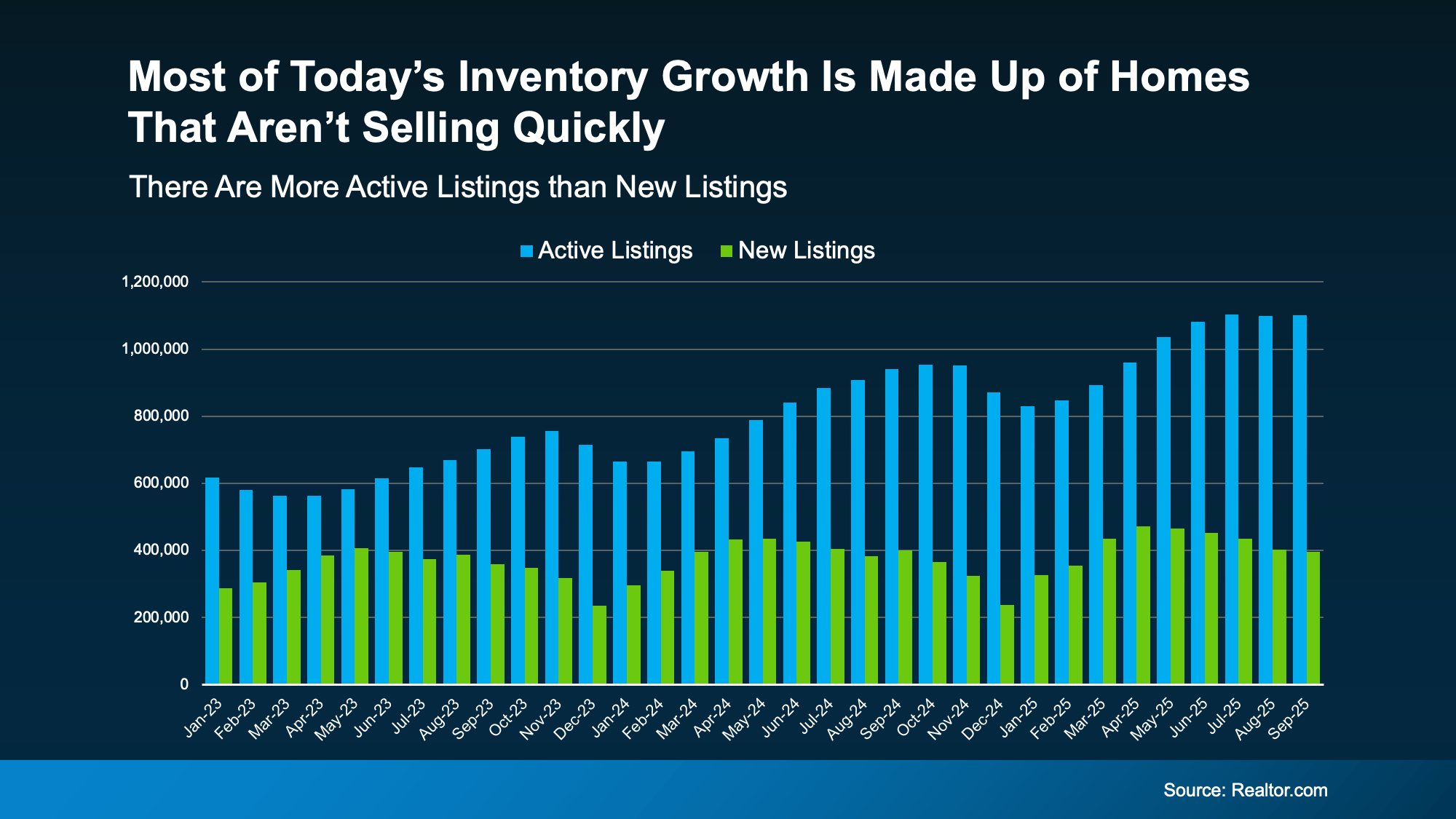
A few years ago, inventory hit a record low. Just about anything sold – and fast. But now, there are far more homes on the market. Listings are up almost 20% from this time last year. And in some areas, supply is even back to levels we last saw in 2017–2019. For sellers, that means one thing:

Your house needs to stand out and grab attention from day one.

That’s especially true when you consider why the number of homes for sale is up. Here’s how it works. Available inventory is a mix of: 

  • Active Listings: homes that have been sitting on the market, but haven’t sold yet
  • New Listings: homes that were just put on the market

Data from Realtor.com shows most of the inventory growth lately is actually from active listings that are staying on the market and taking longer to sell (see the graph below).

The blue bars show active listings. These are the homes that are sitting month to month and not selling. The green bars are new listings, the homes that were just put on the market. And it’s clear there are fewer new listings compared to how many are staying on the market unsold.

a graph of sales growthSince you don’t want your house to be one of the ones that take a long time to sell, let’s break down where things can go sideways and how to set yourself up to sell quickly.

Why Some Homes Sell and Others Sit

The secret to selling in today’s market is simple. Make sure your house is easy for buyers to say yes to as soon as it is listed. 

Price it based on current conditions (not what your neighbor sold for 3 years ago). Make important repairs. And highlight the best things about your house. If you do that, it will sell in any market – sometimes even faster than you’d think. Because the truth is, homes that are priced right today are still selling. 

It’s the homeowners who are clinging to outdated expectations that are seeing their house sit and their listing go stale. According to Redfin and HousingWire, here are some of the most common reasons sales stall out:

  • Priced it too high from the start
  • Skipped necessary repairs before listing
  • Didn’t stage the house well
  • Sellers won't negotiate with buyers
  • Limited availability for showings
  • Ineffective marketing or listing pictures

Most of those things didn’t matter as much just a few years ago. When inventory was at a record low, sellers could skip the prep, name their price, and still walk away with multiple offers over their asking price.

But today’s market is different now that inventory has grown. And that means your approach needs to be different too.

You don’t want to try out old strategies and aim too high just to see what sticks. Your first few weeks on the market are everything. That’s when your listing gets the most attention – and when pricing or presentation mistakes hurt the most. Get it wrong up front and your house will sit...and sit. Get it right, and it’ll be snatched up before you know it.

The Right Agent Helps Your House Stand Out

Selling quickly isn’t about luck. It’s about knowing how to play to the market you’re in. And that’s where your agent comes in.

A great agent will analyze your local market, suggest a price based on the latest comparables sold in your neighborhood, and create a marketing plan that makes buyers pay attention from day one. They’ll also walk you through any repairs you need to make or whether you need to bring in a staging company. As the National Association of Realtors (NAR) explains:

“Home sellers without an agent are nearly twice as likely to say they didn’t accept an offer for at least three months; 53% of sellers who used an agent say they accepted an offer within a month of listing their home.”

That’s the power of getting it right (and getting expert help) from the start.

Bottom Line

There are more homes for sale today than there were even just a year ago, but that doesn’t have to work against you.

When your house is priced right, shows well, and is marketed effectively, it will sell. Let’s connect if you want to know how to make that happen in our market this fall.

Oct. 29, 2025

Planning To Sell in 2026? Start the Prep Now

Planning To Sell in 2026? Start the Prep Now


You’ve got big plans for 2026. But what you do this year could be the difference between a smooth sale and a stressful one. If you’re thinking of selling next spring (the busiest season in real estate), the smartest move you can make is to start prepping now. As Realtor.com says:

“If you’re aiming to sell in 2026, now is the time to start preparing, especially if you want to maximize the spring market’s higher buyer activity.” 

Because the reality is, from small repairs to touch-ups and decluttering, the earlier you start, the easier it’ll be when you’re ready to list. And, the better your house will look when it’s time for it to hit the market.

Why Starting Now Matters

Talk to any good agent and they’ll tell you that you can’t afford to skip repairs in today’s market. There are more homes for sale right now than there have been in years. And since buyers have more to choose from, your house is going to need to look its best to stand out and get the attention it deserves.

Now, that doesn’t mean you have to do a full-on renovation. But it does mean you’ll want to tackle some projects before you sell. Your house will sell if it’s prepped right. And you don’t want to be left scrambling in the spring to get the work done.

Because here’s the advantage you have now. If you start this year, you’ll be able to space those upgrades and fixes out however you want to. More time. Less stress. No sense of being rushed or racing the clock.

Whether it’s fixing that leaky faucet, repainting your front door, or finally replacing your roof, you can do it right if you start now. And you have the time to find great contractors without blowing your budget or paying extra for rushed jobs.

Get an Agent’s Advice Early

To figure out what’s worth doing and what’s not in your market, you need to talk to a local agent early. That way you’re not wasting your time or money on something that won’t help your bottom line. As Realtor.com explains:

“Respondents overwhelmingly agree that both buyers and sellers enjoy a smoother, more successful experience when they start early. In fact, a recent survey reveals that, for sellers, bringing a real estate agent into the process sooner can pay off significantly.

A skilled agent can tell you:

  • What buyers in your local area are looking for
  • The repairs or updates you need to do before you list
  • How to prioritize the projects, if you can’t do them all
  • Skilled local contractors who can help you get the work done

And having that information up front is a game changer.

To give you a rough idea of what may come up in that conversation, here are the most common updates agents are recommending today, according to research from the National Association of Realtors (NAR):

Just remember, what’s worth updating really depends on the homes you’re competing with in your market. Some areas don’t have a ton of inventory, so little updates may be all you need to tackle. In other areas, there are far more homes for sale, so you may need to do a bit more to make your house stand out.

Your agent will walk you through what you need to do for your specific house and market. And that’s expertise that’ll really pay off. 

Bottom Line

If your plan is to sell in 2026, it's time to get serious. Taking some time to prep means you’ll hit the market confident, ready, and ahead of other sellers who waited until January to get started.

Want to know which projects are getting the biggest return on their investment in our market? Let’s connect so you can head into next spring with a solid game plan.

Posted in Sellers
Oct. 27, 2025

Is the Housing Market Going To Crash? Here’s What Experts Say

Is the Housing Market Going To Crash? Here’s What Experts Say


If you’ve seen headlines or social posts calling for a housing crash, it’s easy to wonder if home values are about to take a hit. But here’s the simple truth.

The data doesn’t point to a crash. It points to slow, continued growth.

And sure, it’s going to vary by local area. Some markets will see prices rise more than others. And some may even see small, short-term declines. But the big picture is: home prices are expected to rise nationally, not fall, over the next 5 years.

The Real Story Is in the Expert Forecasts

In the Home Price Expectations Survey (HPES) from Fannie Mae, each quarter over 100 leading housing market experts weigh in on where they project home prices will go from here. And in the report that was just released, the experts agree prices are projected to climb nationally through at least 2029 (see graph below):

a graph of green squaresHere’s how to read this visual. Each bar in that graph shows an increase, not a loss. It’s just that the anticipated pace of that appreciation varies year-to-year.

And to further drive this home, let’s look at another view of where prices are and where they’re expected to go. In this version, the expert forecasts are broken into 3 categories: the overall average, the most optimistic projections, and the most pessimistic projections (see chart below):

a graph on a blue backgroundNotice how even the most pessimistic forecasters say we’ll see prices rise by almost 5% over the next few years.

  • Overall, prices are expected to rise about 15% from now through the end of 2029.
  • The optimists say we’ll beat that and see a roughly 26% increase.
  • And even the pessimists anticipate prices will go up by 5% during that period.

What sticks out the most? None of these groups who study the market are forecasting a crash, or even a decline, over the next 5 years.

How This Compares to “Normal” for the Market

Now, focus back on the first graph. The projections call for 2-3.5% price increases in each of the next five years. For context, the average rate of appreciation for the last 25 years was closer to 4-5% annually.

So, while that’s slightly below the historical average, it’s much more sustainable and typical than where the market was in 2020, 2021, and 2022.

Back then, prices rose too much, too fast based on record-low supply and record-high demand. Some places even saw prices climb by 15-20%.

So, while it may feel like prices are stalling compared to those pandemic-era surges, what’s really happening is that the market is finally finding balance again.

Why Prices Aren’t Expected To Crash

A lot of the chatter about home prices today is based on that rapid rise and the old saying that what goes up, must come down. But historically, that’s not really true. Home prices almost always rise.

And the main reason we’re not heading for a repeat of 2008 is simple: supply and demand.

Even though affordability challenges have made it harder for some people to buy over the past few years, there still aren’t enough homes for everyone who wants one. And that ongoing shortage is keeping upward pressure on prices nationally. 

That’s why experts across the board can confidently agree: we’re not headed for a price collapse, but for steady, long-term appreciation.

And just in case it’s the economy that’s got you worried, remember this. Over the past 50 years, there have been plenty of economic events that have impacted the market. And one thing that’s consistently been true throughout time is the housing market always recovers. And we’re coming through that turn right now and going into a recovery.

Bottom Line

If you’ve been waiting to buy or sell because you’re worried about a crash, it’s time to look at the data – not the headlines.

The question isn’t if home prices will rise, it’s by how much.

Let’s connect so you know what’s happening in our local market and what these forecasts mean for your next move.

Posted in Market Updates, Pricing